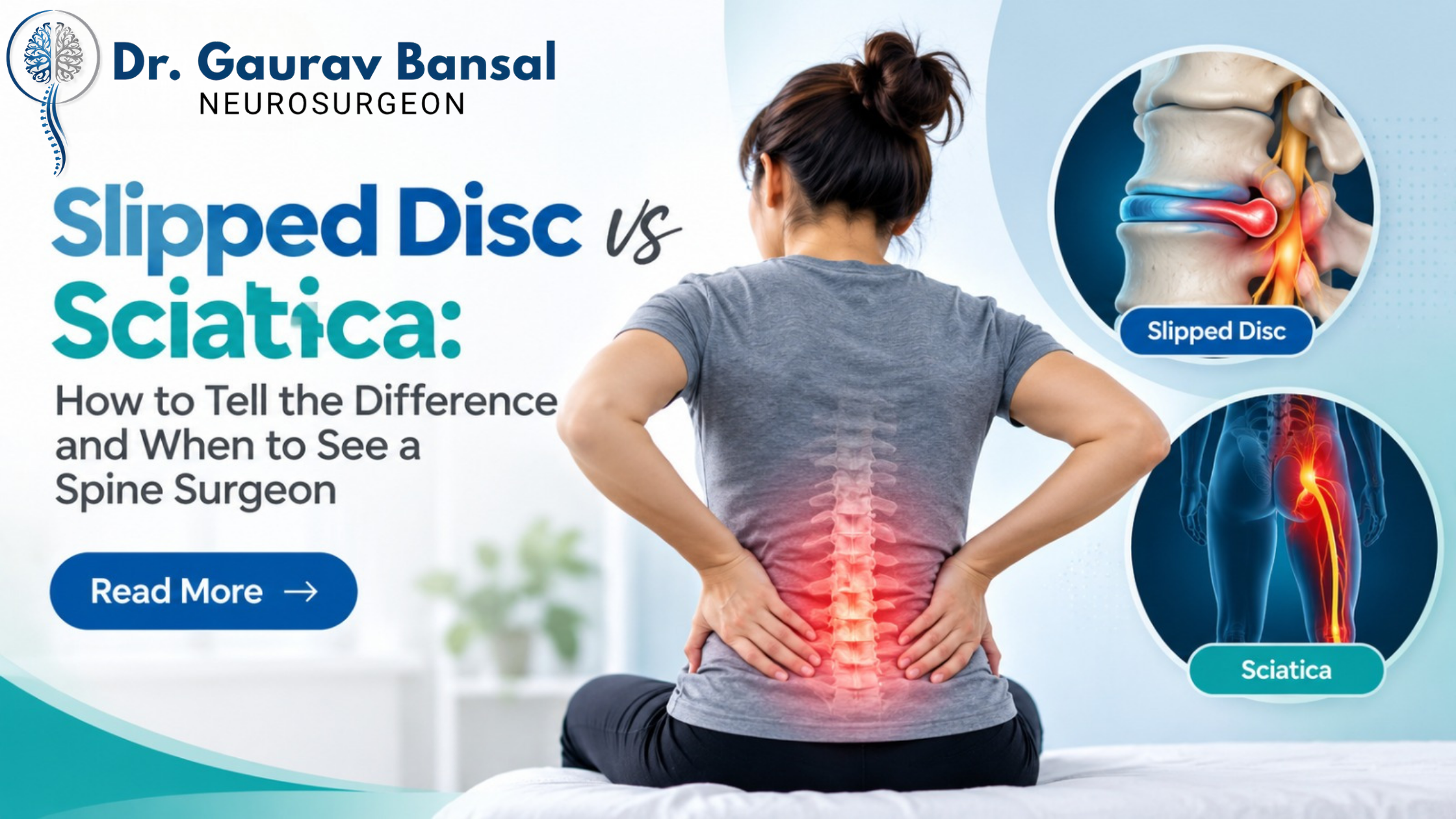
Slipped Disc vs Sciatica: How to Tell the Difference and When to See a Spine Surgeon
Back pain and leg pain are common problems, but understanding what is causing them can be confusing. Two terms that are often used interchangeably are slipped disc and sciatica. However, they are not the same condition.
A slipped disc, also called a herniated or prolapsed disc, occurs when the soft inner material of a spinal disc pushes through a damaged outer layer. If the displaced disc material irritates or compresses a nearby nerve, it can lead to sciatica—pain that travels along the sciatic nerve into the buttock and leg.
Knowing the difference can help you understand your symptoms and determine when professional evaluation is necessary.
What Is a Slipped Disc?
The spine consists of vertebrae separated by soft, flexible discs that act as cushions and help absorb movement and pressure. Each disc has a tough outer layer and a softer inner portion.
A slipped disc happens when part of the inner material pushes through a weakened or torn outer layer. Despite the name, the disc does not actually “slip” out of position. It may bulge or herniate and, in some cases, press against nearby nerves.
A slipped disc can occur anywhere in the spine, but it is particularly common in the lower back. Symptoms may include:
Lower back pain
Pain in the buttocks or legs
Tingling or numbness
Muscle weakness
Difficulty bending or straightening the back
Pain that becomes worse with certain movements
Importantly, not every slipped disc causes symptoms. Some people may have a herniated disc without experiencing pain or other noticeable problems.
What Is Sciatica?
Sciatica is a type of nerve pain, rather than a specific spinal condition. It occurs when the sciatic nerve or one of its nerve roots becomes irritated or compressed.
The sciatic nerve travels from the lower back through the buttocks and down the leg. When one of the nerve roots is compressed, pain can radiate along this pathway.
Typical symptoms of sciatica include:
Sharp or burning pain
Pain travelling from the lower back or buttock into the leg
Tingling or “pins and needles”
Numbness
Weakness in the leg or foot
Symptoms that may become worse with prolonged sitting, coughing or sneezing
Sciatica commonly affects one side of the body. A slipped disc is one of its most common causes, but spinal stenosis, bone changes, spondylolisthesis, and certain injuries can also irritate the sciatic nerve.
Slipped Disc vs Sciatica: What Is the Difference?
The easiest way to understand the difference is to think of the slipped disc as a possible cause and sciatica as a pattern of nerve-related symptoms.
A slipped disc describes a structural problem involving a spinal disc. Sciatica describes pain and other symptoms resulting from irritation or compression of the sciatic nerve or its nerve roots.
For example, a person may have a lumbar slipped disc that presses on a nerve root. This can produce pain travelling from the lower back through the buttock and down the leg—known as sciatica.
However, a person can have a slipped disc without sciatica if the disc does not affect a nerve. Similarly, sciatica can occur without a slipped disc because other conditions can compress or irritate the nerve.
What Causes Slipped Disc and Sciatica?
Several factors can increase the risk of disc problems and nerve-related back pain, including:
Age-related disc degeneration
Improper lifting techniques
Repetitive bending or twisting
Prolonged sitting or driving
Lack of physical activity
Excess body weight
Smoking
Sudden strain or injury
Maintaining an active lifestyle, using proper lifting techniques, maintaining good posture, and strengthening the back and core muscles can help support spinal health.
How Are These Conditions Diagnosed?
Diagnosis usually begins with a detailed discussion of symptoms and a physical examination. A doctor may assess muscle strength, sensation, reflexes, walking ability, and specific movements that reproduce symptoms.
Imaging such as an MRI scan may be recommended when symptoms persist, become severe, or when there are signs of nerve compression requiring further evaluation. An MRI can help identify disc herniation and other spinal abnormalities.
If you are experiencing persistent back pain, radiating leg pain, numbness, or weakness, consulting a best neurosurgeon in Vaishali can help determine whether your symptoms are related to a slipped disc, sciatica, or another spinal condition.
Treatment Options for Slipped Disc and Sciatica
Treatment depends on the cause and severity of symptoms. Many people improve with non-surgical treatment.
Common approaches may include:
1. Activity Modification
Extended bed rest is generally not recommended for routine back and sciatic pain. Gradual movement and appropriate daily activities can support recovery.
2. Medicines
Depending on the individual's condition, a doctor may recommend pain-relieving or anti-inflammatory medicines. These should be taken only as advised by a qualified healthcare professional.
3. Physiotherapy
A structured physiotherapy program can help improve flexibility, strengthen supporting muscles, and promote better posture and movement patterns.
4. Injections
In selected cases with significant nerve-related pain, a specialist may consider an injection to reduce inflammation and provide pain relief.
5. Surgery
Most slipped discs do not require surgery. However, surgery may be considered when symptoms do not improve with appropriate conservative treatment, or when there is significant or worsening nerve weakness. Procedures such as decompression or discectomy may be considered depending on the underlying problem.
A best neurosurgeon in Vaishali can evaluate your symptoms, imaging findings, and response to conservative treatment before determining whether surgery is appropriate.
When Should You See a Spine Surgeon?
You should consider specialist evaluation if your back or leg pain:
Persists despite conservative treatment
Keeps getting worse
Interferes with walking, sleeping, or daily activities
Is accompanied by persistent numbness or tingling
Causes muscle weakness
Repeatedly returns
Does not respond adequately to recommended treatment
A spine specialist can help identify the underlying cause and create an individualized treatment plan. Seeing a best neurosurgeon in Vaishali does not automatically mean you will need surgery. In many cases, the goal is to manage symptoms effectively with non-surgical treatment whenever appropriate.
Red Flags That Need Urgent Medical Attention
Certain symptoms require immediate medical assessment. These include:
Loss of bladder or bowel control
Difficulty passing urine
Numbness around the genitals, buttocks or inner thighs
Severe or worsening weakness in the legs
Significant numbness in both legs
These symptoms can indicate serious nerve compression, including cauda equina syndrome, which requires urgent medical attention.
How Can You Protect Your Spine?
Preventive habits can help reduce stress on the spine. Maintain regular physical activity, avoid prolonged sitting, practice good posture, and use proper lifting techniques. Maintaining a healthy weight and avoiding smoking can also support spinal and disc health.
Conclusion
Slipped disc and sciatica are closely related but are not identical. A slipped disc is a structural problem involving a spinal disc, while sciatica describes nerve-related pain that typically travels from the lower back or buttock into the leg.
Many cases improve with conservative care, but persistent pain, neurological symptoms, or worsening weakness should not be ignored. If symptoms are affecting your mobility or quality of life, consulting a best neurosurgeon in Vaishali can help you understand the cause and explore appropriate treatment options.
Early evaluation can be especially important when symptoms suggest significant nerve compression. The right treatment depends on your symptoms, examination findings, and, when necessary, imaging results.
FAQs
1. Is a slipped disc the same as sciatica?
No. A slipped disc is a spinal disc problem, while sciatica refers to pain caused by irritation or compression of the sciatic nerve or its nerve roots.
2. Can a slipped disc heal without surgery?
Yes. Many slipped discs improve with conservative treatment such as activity modification, medicines, and physiotherapy. Surgery is required only in selected cases.
3. How do I know if my back pain is sciatica?
Sciatica commonly causes pain that travels from the lower back or buttock down one leg, sometimes with tingling, numbness, or weakness.
4. When should I see a spine specialist?
Consult a specialist if pain persists, worsens, interferes with daily activities, or is accompanied by numbness or weakness.
5. Is surgery always required for sciatica?
No. Most people do not require surgery. Surgery may be considered when symptoms persist despite appropriate treatment or when significant nerve weakness or emergency symptoms occur.